If you’re interested in improving the look, texture, and tone of your skin, laser resurfacing is an excellent option. With these treatments, you can address a variety of skin conditions, such as acne scars, rougher skin, uneven pigmentation, and fine lines.
As you consider whether laser resurfacing is right for you, take a moment to learn more about it and the different types of resurfacing lasers you can choose from.
Table of Contents
What Is Laser Resurfacing?
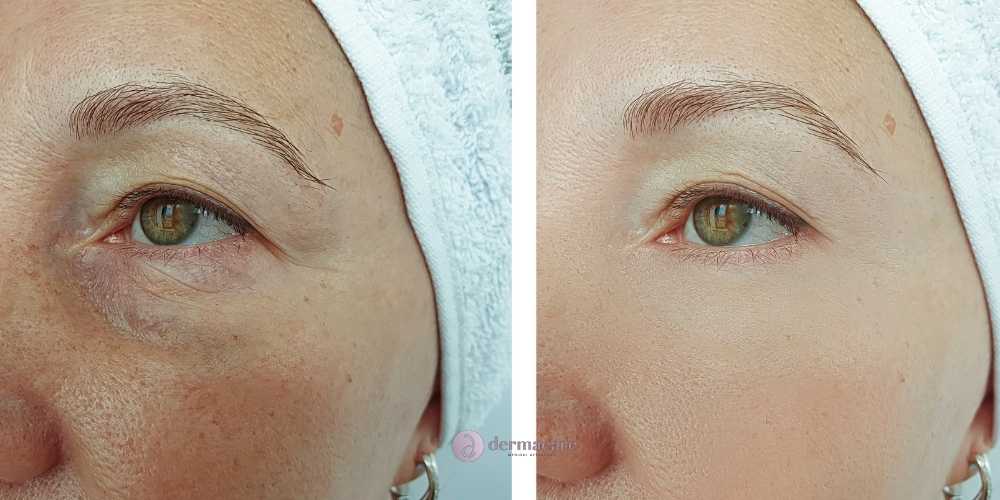
Laser skin resurfacing uses precise laser energy to remove damaged skin and stimulate collagen. After treatment, skin often looks smoother, more even in tone, and a bit firmer.
During this nonsurgical procedure, a provider removes very thin layers of damaged skin and gently warms the deeper layer.
This controlled process triggers your body’s natural healing response, which increases collagen and cell turnover so healthy new skin can form.
What Can Laser Resurfacing Treat?
Fine lines & wrinkles
Fine lines and wrinkles, including early signs of aging around the eyes and mouth
Acne & minor scars
Acne scars and other minor scars from surgery or injury
Uneven pigmentation
Uneven pigmentation, such as brown spots and blotchiness
Texture & pores
Rough texture and enlarged-looking pores
Precancerous lesions
Some types of precancerous skin lesions
How Laser Resurfacing Treatments Are Performed
At a laser resurfacing appointment, a provider uses a medical laser to deliver energy in precise passes. With each pass, the laser vaporizes the outermost layer of skin (epidermis) and warms the layer of skin below it (dermis) to encourage new collagen. Keep in mind, however, that some lasers only warm the dermis and won’t remove the outer layer of skin.
Most plans include a series of sessions for the best results. Settings are tailored to your skin and goals, and your provider may pair resurfacing with medical-grade skincare or other treatments to enhance and maintain outcomes.
4 Types of Laser Resurfacing Treatments
Laser resurfacing technologies generally fall into four main categories: ablative, non-ablative, fractional ablative, and hybrid. Each works at different skin depths to stimulate collagen, refine texture, and even tone with varying levels of downtime.
1. Ablative Laser Resurfacing
Ablative resurfacing removes the outer skin layer and gently heats the dermis to trigger collagen, creating a smoother texture and more even tone.
How Ablative Lasers Work
During ablative resurfacing, the laser precisely vaporizes the epidermis while warming the dermis to start a controlled healing response.
By tailoring the depth of each pass, your provider can target etched lines, significant sun damage, and scars with uniform coverage.
Common types of ablative lasers include:
- CO₂ lasers: These laser platforms reach deep enough to treat severe sun damage, deeper wrinkles, and more pronounced scarring, often producing dramatic improvement with a longer recovery.
- Erbium lasers: These systems remove thinner layers of skin with high precision, making them well-suited to treat moderate lines and discoloration while typically having a shorter downtime.
Is Ablative Laser Resurfacing Right for Me?
Ablative treatment is a strong choice when you want visible change and can plan for redness, swelling, and several days of recovery.
For comprehensive rejuvenation, your provider may coordinate ablative resurfacing with complementary procedures and prescribe medical-grade skincare to support healing.
2. Non-Ablative Lasers
Non-ablative resurfacing heats the dermis without removing surface skin, stimulating collagen to achieve a smoother texture and more even tone with minimal downtime.
How Non-Ablative Lasers Work
With non-ablative resurfacing, the laser leaves the surface intact and delivers controlled heat to the dermis.
This thermal stimulation encourages new collagen while preserving the epidermis, which helps shorten recovery and maintain comfort.
Common types of non-ablative lasers include:
- Nd:YAG lasers: These lasers Emit 1064 nm light that penetrates deeply to target vessels and pigment. ND:YAG lasers are typically used for spider veins and other vascular lesions, pigmented spots and melasma, hair removal on darker skin, collagen-stimulating rejuvenation, dark tattoo ink, and acne.
- Diode lasers: Diode lasers emit 800–900 nm light that targets melanin in hair follicles. These lasers are primarily used for treating acne scarring and hair removal across many skin types, especially effective on dark hair.
Is Non-Ablative Laser Resurfacing Right for Me?
Non-ablative treatment is a good fit for mild to moderate lines, textural roughness, early acne scarring, or uneven pigmentation.
Since results build gradually, most plans include a series of sessions using diode or Nd:YAG lasers, with little interruption to daily activities.
3. Fractional Laser
Fractional lasers treat skin in tiny dots, leaving nearby skin intact. Focusing on small dots of skin speeds healing and prompts new collagen for smoother texture and a more even skin tone.
How Fractional Lasers Work
Instead of treating the whole surface at once, fractional devices create many microscopic columns in the skin while the surrounding skin stays untouched.
Those untreated areas help the skin repair faster, and the treated spots trigger collagen building that can soften lines, scars, and discoloration.
Fractional platforms can be ablative (removing tiny columns of surface skin and heating the underlying skin) or non-ablative (heating those columns without removing skin).
Both approaches aim for clear, smoother skin with less downtime than full-field lasers.
Is Fractional Laser Surfacing Right for Me?
Fractional treatment is often recommended for acne scars, surgical or traumatic scars, pigment irregularities, and fine to deeper wrinkles.
Due to their shorter downtime, ability to only target a fraction of the skin, and fewer risks, fractional lasers are usually recommended to patients over traditional ablative or non-ablative lasers.
Systems such as Fraxel® II or LUX 1540 allow providers to adjust depth and density to match your goals and downtime preferences. Many patients schedule periodic sessions to maintain long-term skin quality.
4. Hybrid Resurfacing Laser
Hybrid fractional resurfacing combines ablative and non-ablative wavelengths in the same zones of the skin, renewing the surface and stimulating deeper collagen in one treatment.
How Hybrid Resurfacing Lasers Work
Hybrid lasers use two types of laser light (ablative and non-ablative) on the same tiny spots during a single visit. One laser gently refreshes the top layer of skin so new, healthy skin can form, and the other laser warms the deeper layer to spark new collagen.
Because both lasers are directed at the same place, you get surface renewal and deeper smoothing at the same time. Even better, hybrid lasers often come with less downtime than doing two separate treatments.
Is Hybrid Resurfacing Right for Me?
A hybrid approach is a good choice when you want noticeable improvement across multiple concerns, such as uneven pigment, enlarged-looking pores, and fine to moderate lines, while balancing results with a measured recovery.
Treatments typically include topical numbing and motion tracking for even coverage. Hybrid resurfacing also integrates smoothly with a medical-grade skincare plan to extend benefits.
Comparing the 4 Main Laser Resurfacing Treatments
| Type | What It Does | Best For | Examples | Typical Downtime | Why Pick It |
|---|---|---|---|---|---|
| Ablative | Removes the top skin layer and warms the layer below to spark new collagen. | Deep wrinkles, heavy sun damage, and noticeable scars. | CO₂, Erbium | About 1–2 weeks, sometimes longer if treatment is deep. | Gives the biggest change in one treatment, but recovery is longer. |
| Non-ablative | Heats the deeper skin without removing the surface. | Mild to moderate lines, rough texture, and early pigment issues. | Nd:YAG, Diode | Little to none; redness usually fades in hours to a day. | Good if you want results with minimal time off, usually done in a series. |
| Fractional (Ablative or Non-Ablative) | Treats tiny dots of skin and leaves nearby skin alone to help it heal faster. | Fine to deep lines, acne or surgical scars, sun damage, and uneven tone. | Fractional CO₂, Fraxel-type | Shorter than full-field ablative. Often, around 1 week for fractional CO₂, and a few days for non-ablative fractional. | Balances results and recovery, can be repeated for maintenance. |
| Hybrid Fractional | Uses an ablative and a non-ablative beam in the same tiny spots. One refreshes the surface, one boosts deeper collagen. | Mixed concerns like spots and texture, large pores, and fine to moderate lines. | HALO | Usually mid-range, about 5–10 days depending on settings. | Provides strong results with moderate downtime in one session. |
FAQs About Laser Resurfacing
Who Is a Good Candidate for Laser Resurfacing?
Individuals with fair to medium skin tones and concerns like fine lines, sun damage, or acne scars are typically good candidates. Good overall health and realistic expectations are also important.
Who Isn’t a Good Candidate for Laser Resurfacing?
Those with active skin infections, very dark skin tones, or certain medical conditions may not be suitable candidates. A consultation with a dermatologist is essential to assess eligibility.
How Long Does Laser Resurfacing Last?
Results can last several years, especially for concerns like acne scars. However, natural aging and sun exposure can affect longevity.
Is Laser Resurfacing Permanent?
While results can be long-lasting, they are not permanent. Maintenance treatments may be needed to sustain optimal results.
How Much Downtime Do You Need After Laser Resurfacing?
- Ablative lasers (e.g., CO₂, Erbium): Typically require 7–14 days of recovery due to skin peeling and redness.
- Non-ablative lasers (e.g., Nd:YAG, Diode): Generally involve minimal downtime, with redness often subsiding within a few hours to a day.
- Fractional lasers (ablative or non-ablative): Recovery time varies. Ablative fractional lasers may require 7 to 14 days, while non-ablative types typically have a few hours to a few days of downtime.
- Hybrid lasers (e.g., HALO): Offer a balance between effectiveness and downtime, with recovery times ranging from 5 to 7 days.
What Is CO2 Laser Resurfacing?
CO₂ laser resurfacing uses targeted beams of light to remove the superficial layer of your skin, stimulating newer skin to grow in its place.
What Body Areas Can Be Treated With Laser Resurfacing?
Laser resurfacing is commonly used on the face to address issues like wrinkles, acne scars, and pigmentation. It can also be applied to other body areas such as the neck, chest, hands, and arms to improve skin texture and tone.
Is Laser Resurfacing Safe?
Yes, when performed by a qualified professional, laser resurfacing is considered safe. However, some risks exist, including infection, scarring, and pigmentation changes.
Is Laser Resurfacing Safe for People With Darker Skin Tones?
Laser resurfacing can be safe for darker skin tones (Fitzpatrick Types IV–VI) when appropriate lasers are used. Due to the higher melanin content in these skin tones, patients have a higher risk of hyperpigmentation, hypopigmentation, and scarring.
Nd:YAG lasers are often recommended for these skin types as they penetrate deeper without affecting the epidermis significantly.
Does Laser Resurfacing Hurt?
Discomfort varies, with some describing it as feeling like a rubber band snap. Topical anesthetics are often used to minimize pain.
What Does Laser Resurfacing Do?
Laser resurfacing removes damaged skin layers, stimulates collagen production, and improves skin texture and tone.
How Does Laser Resurfacing Compare to Microneedling?
- Mechanism: Laser resurfacing uses light energy to remove skin layers or stimulate collagen, while microneedling uses fine needles to create micro-injuries, promoting collagen production.
- Effectiveness: Laser resurfacing can provide more dramatic results, especially for deeper wrinkles and scars, whereas microneedling is better for mild to moderate concerns.
- Downtime: Laser resurfacing, particularly ablative types, requires more recovery time compared to microneedling.
- Safety for Skin Tones: Microneedling is generally safer for darker skin tones, as it doesn’t involve heat that can cause pigmentation changes.
Is Laser Resurfacing Worth It?
Many find laser resurfacing worthwhile for its significant skin improvements and long-lasting results. Consultation with a dermatologist can help determine if it’s right for you.
Schedule a Laser Resurfacing Appointment in San Diego at Dermacare
If you’re looking for laser resurfacing providers in San Diego, Dermacare can help. When you sign up for a consultation, our team will discuss your goals and come up with a plan ideal for your needs and skin type. Our most popular deep skin resurfacing options include SmartSkin CO2 Laser Surfacing and Lux 1540 Fractional Laser Resurfacing. Our other resurfacing options include Fraxel II Laser Resurfacing, Pico Laser Resurfacing, and Laser Genesis Laser Resurfacing.
Learn more about our laser surfacing treatments today. If you’re ready to sign up, please make an appointment.