Hair thinning is very common for men and women, and you’re not alone if you thought the only effective option for combating hair loss was surgery. However, non-surgical hair restoration services have come a long way in recent years, and you have lots of options you can take advantage of to restore your hair.
As you consider whether non-surgical hair restoration is right for you, take a moment to learn more about how it works and your options.
Key Takeaways
- Non-surgical hair restoration focuses on stimulating existing follicles, reducing inflammation, and improving scalp circulation rather than moving hair from one area to another.
- These treatments work best for people with active follicles and visible thinning, such as a widening part or receding hairline, rather than completely smooth or shiny areas.
- Evidence-supported options include low-level laser or red light caps, topical and oral minoxidil, platelet-rich plasma injections, nutraceutical supplements, and advanced growth-factor or plated serums.
- Combination plans, such as FoLix fractional laser paired with PRP, topical therapies, nutraceuticals, and red light therapy, often produce better results than a single treatment alone.
- Results are gradual and typically require a series of treatments plus ongoing maintenance, with many patients seeing the most improvement over three to six months.
Table of Contents
What Is Non-Surgical Hair Restoration?
Also called non-invasive hair restoration, non-surgical hair restoration is an umbrella term for treatments that stimulate existing follicles, reduce inflammation, and improve scalp circulation.
Instead of moving hair from one area to another, these options work with your biology to keep hair in the growing phase longer and to support stronger, thicker strands.
These therapies can include in-office procedures, such as fractional laser treatments and platelet-rich plasma. Some treatments, like topical medications, medical-grade serums, nutraceutical supplements, and red light caps, can be done at home.
Your provider can mix and match these tools based on your hair loss pattern, how quickly it is changing, and how aggressive you would like your plan to be.
Does Non-Surgical Hair Restoration Work?
Decades of research show that several non-surgical options can meaningfully improve hair growth for many people with androgenetic or age-related thinning.
For instance, low-level laser devices have been shown in randomized trials and meta-analyses to increase hair counts and density compared with sham treatments. Topical and oral minoxidil remain foundational medical therapies, with multiple studies confirming better regrowth than placebo in both men and women.
Regenerative treatments and supportive therapies can add another layer of benefit for the right patient. Platelet-rich plasma injections have been associated with higher patient satisfaction and thicker hair in pattern hair loss.
Clinical trials with nutraceuticals, such as multi-ingredient supplements, report reduced shedding and visible improvements in hair quality.
Results are gradual, and most people see the best outcomes when they combine several therapies and follow a maintenance plan.
Who Is a Candidate for Non-Surgical Hair Restoration?
Non-surgical hair restoration works best for people who still have active follicles in the thinning areas.
Ideal candidates usually notice increased shedding, a widening part, or a receding hairline, rather than a completely smooth or shiny scalp. When some hair is still present, treatments can stimulate those weakened follicles and help preserve more of your existing density.
A good candidate is generally in overall good health, has realistic expectations, and is willing to follow a series of treatments over several months. Non-surgical options can be especially helpful if you are not ready for transplant surgery or are not a surgical candidate because of medical issues.
During a consultation, your provider will review your history, medications, and scalp exam to decide which therapies make sense.
What Are the Main Non-Surgical Hair Restoration Options?
Once your provider understands your pattern of hair loss, the next step is choosing the combination of non-surgical treatments that fits your needs. Hair loss treatment plans often blend in-office procedures such as FoLix laser sessions and platelet-rich plasma (PRP) with at-home topical therapies, nutraceuticals, and red light caps.
Find out more about the five main types of non-surgical hair restoration options below:
1. FoLix Laser Hair Treatments
FoLix is the first FDA-cleared fractional laser system designed specifically for non-invasive hair loss treatment in men and women. It uses fractional laser energy to create microscopic treatment zones in the scalp. These zones trigger a controlled healing response, improve blood flow, and help reawaken underperforming follicles for fuller, thicker-looking hair.
FoLix is often the cornerstone of a non-surgical hair plan, especially for early-to-moderate thinning. Sessions typically take about 20 to 30 minutes and involve little to no downtime, so most people can return to normal activities right away.
Your provider may pair FoLix with PRP, topical growth-factor serums, nutraceuticals, or red light caps for more comprehensive support.
2. Topical Therapies
Topical therapies are treatments you apply directly to the scalp to support follicles where they live. They are usually used daily, so they provide steady exposure to active ingredients.
Medical topicals such as minoxidil increase blood flow around hair follicles and extend the growth phase. Increasing blood flow can improve hair regrowth and scalp coverage in people with androgenetic alopecia.
Many practices now offer advanced growth-factor serums, such as Ariessence, which use platelet-derived growth factors to nourish the scalp. These formulas are designed to revitalize follicles, support circulation, and improve overall scalp health.
In many practices, Ariessence can be combined with microneedling or laser treatments, so the microchannels help growth factors penetrate more deeply, potentially enhancing early improvements in hair thickness and density.
3. Nutraceutical Support
Nutraceutical support focuses on the internal factors that influence hair, including stress, hormones, micro-inflammation, and nutrient gaps. For example, Nutrafol is a multi-ingredient supplement that targets several of these pathways with standardized botanicals, marine collagen, antioxidants, and vitamins.
In randomized, double-blind, placebo-controlled studies, Nutrafol-style formulations have been shown to increase terminal hair counts and improve hair quality over three to six months in adults with thinning hair.
Because nutraceuticals work from the inside out, they are rarely used alone for noticeable regrowth. Instead, many providers recommend Nutrafol as a foundation to support overall hair health while in-office treatments like FoLix, PRP, or topical therapies directly stimulate the scalp.
This combined approach can help reduce shedding, improve hair strength, and maintain results once you complete your initial series of non-surgical treatments.
4. PRP Microneedling
Microneedling uses a pen or roller with very fine needles to create controlled micro-injuries in the scalp. These tiny channels stimulate a wound-healing response, increase blood flow, and can make it easier for growth factors or medications to reach the follicles.
For hair loss, microneedling is often paired with platelet-rich plasma or topical treatments to amplify their absorption and impact on thinning areas. Clinical studies suggest that microneedling can improve outcomes for androgenetic alopecia, especially as an add-on to standard therapies.
Research has found that combining microneedling with minoxidil or PRP leads to greater gains in hair density and thickness than medications alone, with some trials reporting 50% to 75% improvement in growth among participants. Most patients need a series of sessions, then periodic maintenance to sustain results.
5. Plated Hair Serums
Plated hair serums are topical products formulated with human platelet extract and extracellular vesicles that deliver regenerative signals to the scalp.
The Plated Hair Serum with Renewosome technology is designed to support a healthier scalp environment, improve the look of thinning hair, and complement other hair restoration treatments. You apply it directly to the scalp, usually several times per week, as part of your home-care routine.
Early clinical data for plated hair serums are promising but still emerging. A recent double-blind, placebo-controlled study of topical human platelet extract serum reported significant improvements in hair and scalp health in adults with self-perceived thinning.
Since exosome-based cosmetics are a newer category, most experts view these products as an adjunct to evidence-based therapies rather than a stand-alone cure for hair loss.
6. Red Light Therapy
Red light therapy caps use low-level laser or LED light at specific wavelengths to gently stimulate follicles.
Worn at home several times per week, these caps deliver energy through the scalp to improve cellular activity and blood flow around the hair bulb. They are painless, non-invasive, and fit easily into a routine, which makes them a convenient long-term maintenance option for many patients.
Multiple randomized, sham-controlled studies suggest that helmet or cap-style low-level light therapy (LLLT) can increase hair density and hair counts in men and women with androgenetic alopecia compared with placebo devices.
Improvements usually appear gradually over three to six months and are greatest when LLLT is combined with other treatments such as topical minoxidil or in-office procedures. Ongoing use is important to maintain the gains you achieve.
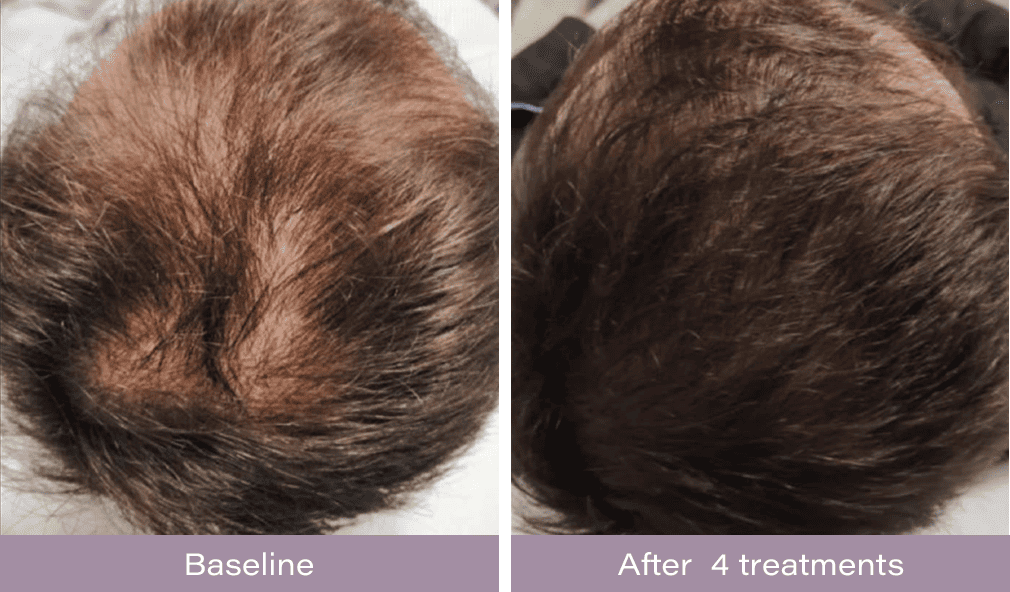
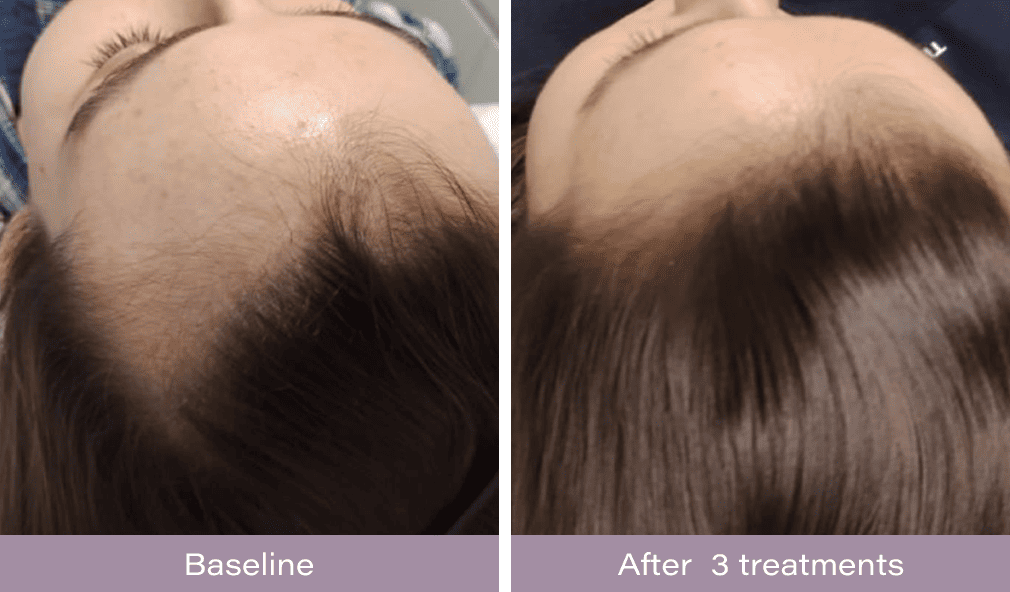
Dermacare Non-Surgical Hair Restoration Before and After

Schedule a Hair Restoration Consultation at Dermacare
If you’re looking for non-surgical hair restoration treatments in San Diego, CA, Dermacare is ready to welcome you to one of our med spas. We regularly provide FoLix to men and women, helping them reawaken their existing follicles and increase circulation to stimulate growth. We also often recommend pairing FoLix with other services we offer, such as microneedling and red light therapy!
Learn more about our non-surgical hair restoration treatments in San Diego today. If you’re ready to schedule a consultation, please contact us.