Botox in Aliso Viejo, CA
AT DERMACARE MEDICAL AESTHETICS
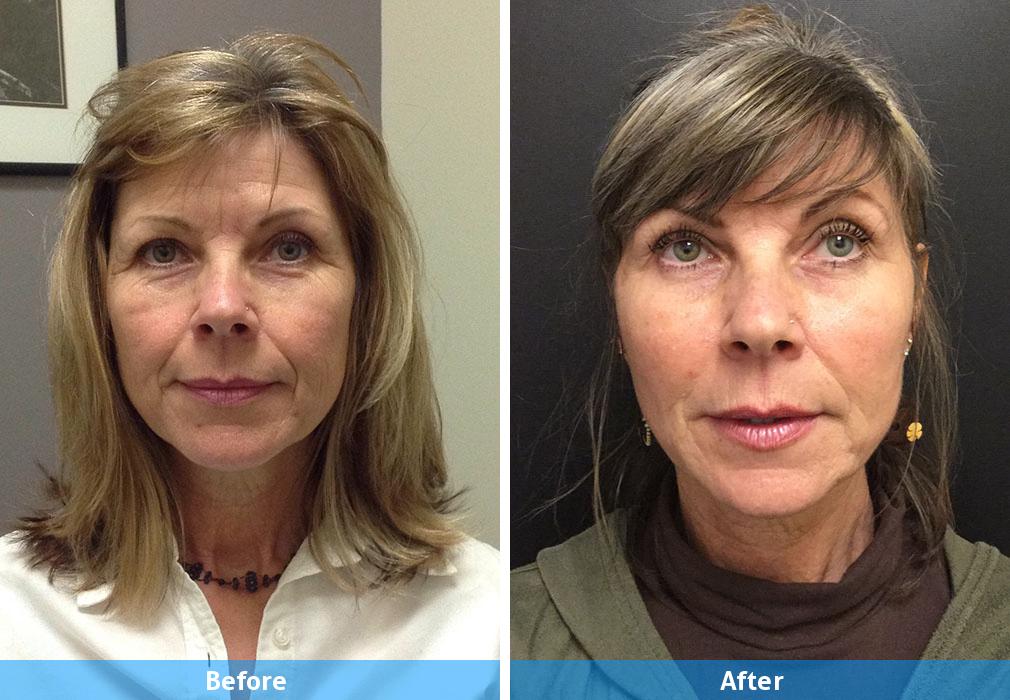
At Dermacare, we make Botox pricing simple and predictable. Treatments are $14/unit with our expert nurse injectors and $16/unit with a physician.
First-time treatments are often less than patients expect: they typically inject between 10 and 20 units per area ($140–$280). You’ll always approve your exact dosage and quote before anything is injected.
Our nearest clinic to Aliso Viejo is in San Juan Capistrano, south down the I-5.
Dermacare San Juan Capistrano
Med Spa · 12 minutes from Aliso Viejo
31371 Rancho Viejo Rd. Suite 201
San Juan Capistrano, CA 92675
Hours
| Monday | 8:00am – 4:00pm |
| Tuesday | 8:00am – 4:00pm |
| Wednesday | 10:00am – 6:00pm |
| Thursday | 8:00am – 4:00pm |
| Friday | 8:00am – 4:00pm |
| Saturday | Closed |
| Sunday | Closed |
What Botox Costs in Aliso Viejo
Botox is charged by the unit, so you only pay for what you actually need. If you’re new to Botox, we usually recommend starting with a lighter dose to see how your muscles respond.
You can always add a few more units at your follow-up visit. At Dermacare, you never pay for a one-size-fits-all package. This customized approach keeps initial costs flexible and often surprisingly affordable.
| Area | Lighter first dose | Typical full dose | At $14/unit |
|---|---|---|---|
| Frown lines (the "11s") | ~10 units | ~20 units | $140 - $280 |
| Forehead lines | ~10 units | ~20 units | $140 - $280 |
| Crow's feet (both sides) | ~12 units | ~24 units | $168 - $336 |
| Brow lift | ~4–6 units | ~10 units | $56 - $140 |
Is It Too Early? On Starting in Your Late Twenties and Thirties
This is the question we get most from people in Aliso Viejo.
Expression lines arrive in two stages. At first they only turn up when you move — you raise your brows, a line appears, you relax, it goes. After years of the same movement the skin along that fold thins and creases until the line stays put even when your face is completely still. The case for starting early is simply that taking some force out of the movement during the first stage delays the arrival of the second.
In 2006, Archives of Facial Plastic Surgery published a comparison of identical twins followed over thirteen years. One was treated two or three times a year. The other had two treatments in that entire period. At the end, the regularly treated twin had no imprinted forehead or frown lines. Her sister did.
To see what stage you are at, find good light and look at your face completely at rest. If the line vanishes the moment you stop moving, you have time. If it hangs around for a beat after the movement stops, that’s precisely the window the preventative argument is about. And if it’s sitting there with your face entirely still, you’re past prevention and into treatment, and Botox on its own won’t be enough — that’s a conversation about resurfacing or filler alongside it.
What People Mean by “Baby Botox”
Baby Botox isn’t a different product or a special technique, whatever the name suggests. It’s ordinary Botox at a smaller dose — usually somewhere between half and two-thirds of a standard treatment — placed to soften a movement rather than stop it.
It suits two sorts of people especially well. The first is anyone treating early, where the goal is to take the habit out of a movement rather than to erase a set line. The second is anyone whose face is part of their job. If you present, teach, or spend half your week on camera, keeping your expressions isn’t vanity. You need them.
If lighter is what you want, say so in those words. “I’d like to keep some movement” is a dosing instruction your injector can work with, and it’s a completely ordinary thing to ask for.
Who Performs Your Botox Injections
Every Botox treatment at Dermacare is performed by a licensed medical professional under the medical direction of Jeff Birchall, M.D. You choose whether that’s a physician, a nurse practitioner, a physician assistant, or a registered nurse, and the price follows your choice.
Injecting well is an anatomy problem first. The same 20 units placed two millimeters apart produce two different faces, which is why patients ask about their injector’s background far more than they used to.
Dr. Birchall is board certified and has spent more than 25 years in aesthetic medicine. He belongs to the American Society for Laser Medicine and Surgery and the American Association of Aesthetic Medicine, and the injector team he’s built carries more than 60 years of combined experience across our five Southern California locations.
Dermacare also holds Black Diamond provider status with Allergan for BOTOX® and JUVÉDERM®, which places the practice in the top 100 of more than 30,000 providers nationally. That status reflects volume, and volume by itself is only part of the picture. What it means in practice is that our injectors work on these muscles every day, and a good deal of the skill in this treatment lives in that repetition.
If you’re worried about looking frozen, say so at your consultation. A natural result comes from placing fewer units precisely, and your injector needs to know how much movement you want to keep. It’s the most common question we get, and it’s a reasonable one to ask.

What Happens at Your Appointment
The appointment itself takes about twenty minutes, most of it conversation. The injections are over in a few minutes. But the result you’re actually paying for doesn’t arrive until day fourteen.
Your injector will ask what’s been bothering you and then watch your face move — brows up, frown, smile. That’s how your dose gets decided, rather than from any standard chart. The injections are quick and shallow, and most people are surprised it’s finished before they’d properly braced for it. If needles make you anxious, say so when you arrive rather than afterward; there are things we can do about it. You’ll have small raised bumps at each site that go down in twenty minutes or so, and then you can drive yourself home and go straight back to the office.

Your First Two Weeks, Day by Day
The day after your appointment, nothing. This worries first-timers more than anything else, and it shouldn’t. Nothing has gone wrong. The product simply hasn’t taken effect yet.
Around days three to five, the first softening occurs. Movement in the treated area starts to feel less forceful, and most people notice it in the mirror well before anyone notices it on them.
Day fourteen is the real finish line. This is when to judge your treatment, and when to raise anything that looks uneven. A small adjustment at two weeks is a normal part of a first treatment, not a sign that something went wrong.
Somewhere around months three to four, movement comes back. Three or four visits a year is the usual rhythm once people settle into it.
As for aftercare, there are four rules and they all apply to the first day only: stay upright for four hours, skip anything strenuous or hot, keep your hands off the treated areas, and give alcohol a miss for a day if you bruise easily. Everything else — makeup, washing your face, the rest of your routine — carries on untouched.

Getting Here From Aliso Viejo
We’re at 31371 Rancho Viejo Rd, Suite 201, southeast of Aliso Viejo. The building sits on Rancho Viejo Road just off the freeway, so there’s no hunting around for it, and patients coming from Laguna Niguel, Laguna Hills and Laguna Woods take the same route in.
Appointments run 8 to 4 on Monday, Tuesday, Thursday and Friday. Wednesday shifts later, 10 to 6, for anyone who can’t get away mid-morning — and a first Botox visit fits comfortably inside a long lunch.
Dermacare San Juan Capistrano
Med Spa · 12 minutes from Aliso Viejo
31371 Rancho Viejo Rd. Suite 201
San Juan Capistrano, CA 92675
Hours
| Monday | 8:00am – 4:00pm |
| Tuesday | 8:00am – 4:00pm |
| Wednesday | 10:00am – 6:00pm |
| Thursday | 8:00am – 4:00pm |
| Friday | 8:00am – 4:00pm |
| Saturday | Closed |
| Sunday | Closed |

What age should I start Botox?
There isn’t one, and be wary of anyone who gives you a number. The signal worth watching is whether a line lingers after you’ve stopped moving. If it’s invisible at rest, there’s no hurry. If it’s visible at rest, Botox alone won’t remove it.
Does preventative Botox actually work?
Probably, though the evidence is thinner than the marketing suggests. The study everyone cites is a thirteen-year comparison of identical twins, where the regularly treated twin ended up with no imprinted forehead or frown lines and her minimally treated sister did. It’s a compelling result, but it’s a case report on two people rather than a trial.
What's a typical first dose?
Usually ten to twenty units on a single area, which is lighter than a full treatment. At $14 a unit that’s roughly $140 to $280.
What is baby Botox?
Ordinary Botox at a smaller dose — typically half to two-thirds of a standard treatment — placed to soften a movement rather than stop it. It wears off sooner than a full dose does.
Can I go back to work straight afterward?
Usually, yes. There’s no downtime and nothing stopping you driving. The raised bumps go down in about twenty minutes, and makeup over them is fine once they have.
Can Botox be undone if I don't like it?
Not the way filler can — there’s no reversal agent, so it has to wear off. In the meantime, a heavy brow or an unevenness can often be improved by adding a small amount elsewhere, so it’s worth coming back rather than waiting it out.
How far ahead of a wedding should I book?
Three weeks. Two for the real result to arrive, and one more in case you’d like it adjusted.
Is Botox cheaper somewhere else in Aliso Viejo?
Sometimes, and sometimes the comparison isn’t like for like. Units are specific to each product and can’t be converted between brands — Dysport runs about two and a half of its units to one of Botox’s. Compare what a whole treatment costs rather than what a single unit costs.
How long does a first appointment take?
About twenty minutes, most of it conversation rather than injections. Come expecting to be assessed first, and know that you’re free to leave without booking anything.
What does a year of Botox actually cost?
On a light dose on one area, three or four visits at $140 to $280 works out somewhere between $420 and $1,120 a year. Treating more areas, or moving up to a full dose, takes it from there.